
Experiments with West Coast Native Annuals
Del Brummet
Del Brummet is head gardener at the Elisabeth C. Miller Botanical Garden.
I was fascinated right at the start by the naturalistic style that the Miller Garden employed which somehow didn’t look “messy”. Though collections in the garden were from far off places like Japan, Tasmania, Chile and Greece, often when I looked at a particular vignette in the garden I felt like I was standing in the lush Olympic rain forest or in the nearby Cascade range. What knits the whole garden together giving it a seamless appearance is a combination of native plants and repeated groupings of ornamental plants throughout. The native plants range from tremendous Douglas Firs (Pseudotsuga menziesii) in the upper garden to diminutive perennials like Pacific Star Flower (Lysimachia latifolia) sneaking around the mossy woodland. Working in the garden over the years I started to see how the staff shepherds native plants by cutting down salal (Gaultheria shallon) when it gets too large or digging out False Solomon Seal (Maianthemum racemosum) occasionally to keep it from swallowing smaller rare plants.
My interest in plants grew from hiking and seeing how plants grow in the wild. After encountering a great diversity of annuals, perennials and bulbs in the prairies of Washington I got interested in a group of plants which are under-utilized in Pacific Northwest gardens which we will call West Coast native annuals. The plants sprout at a variety of times but are best sown in late summer into early fall. Some of them will sprout leaves then, beginning to occupy space where other weedy annuals like shot weed would like to sprout. Others tolerate winter cold and sprout in spring.
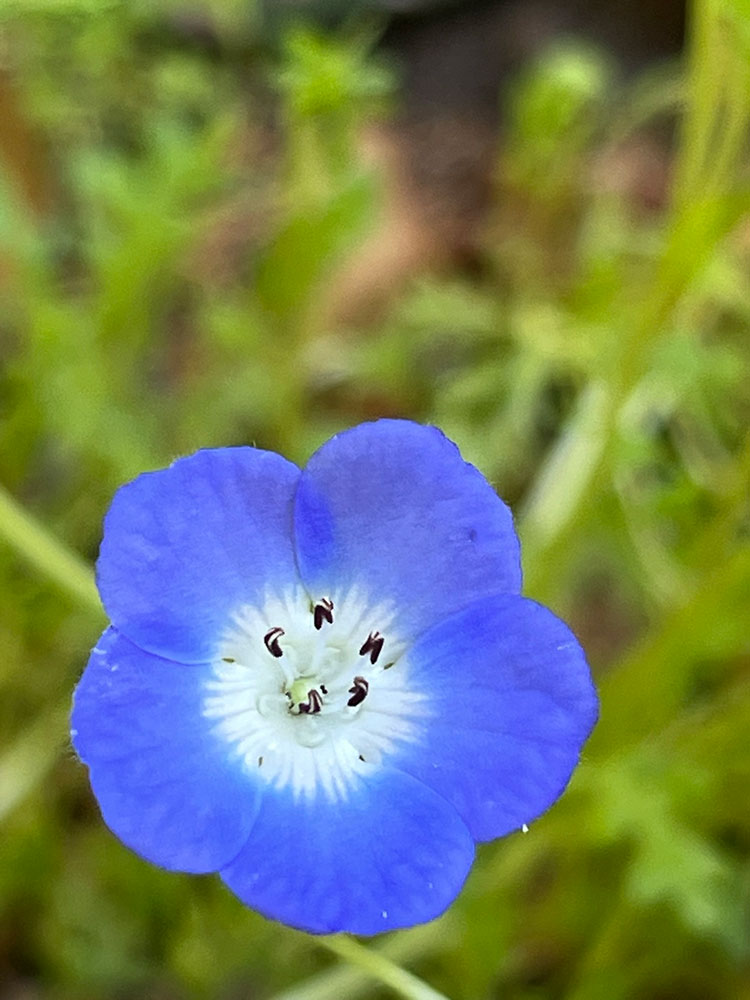
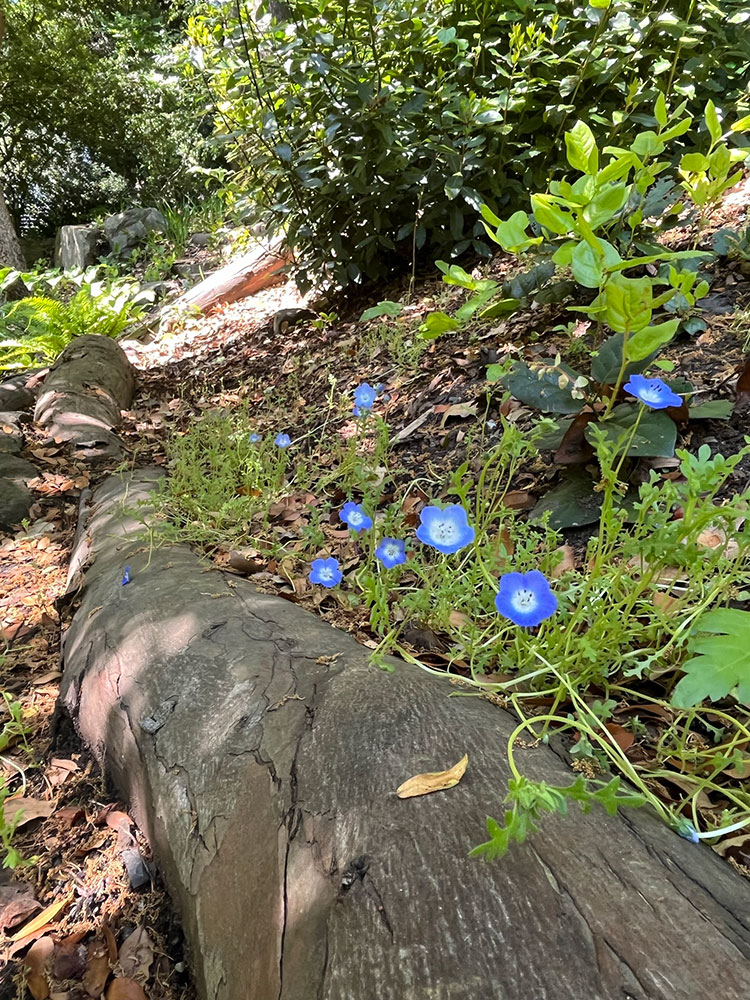
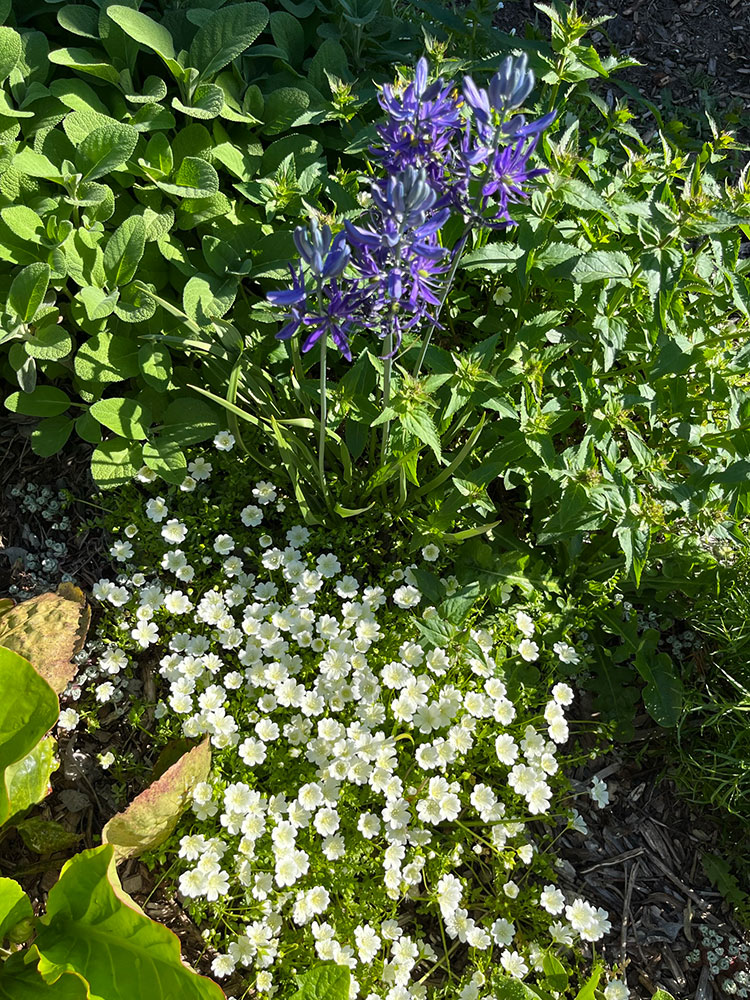
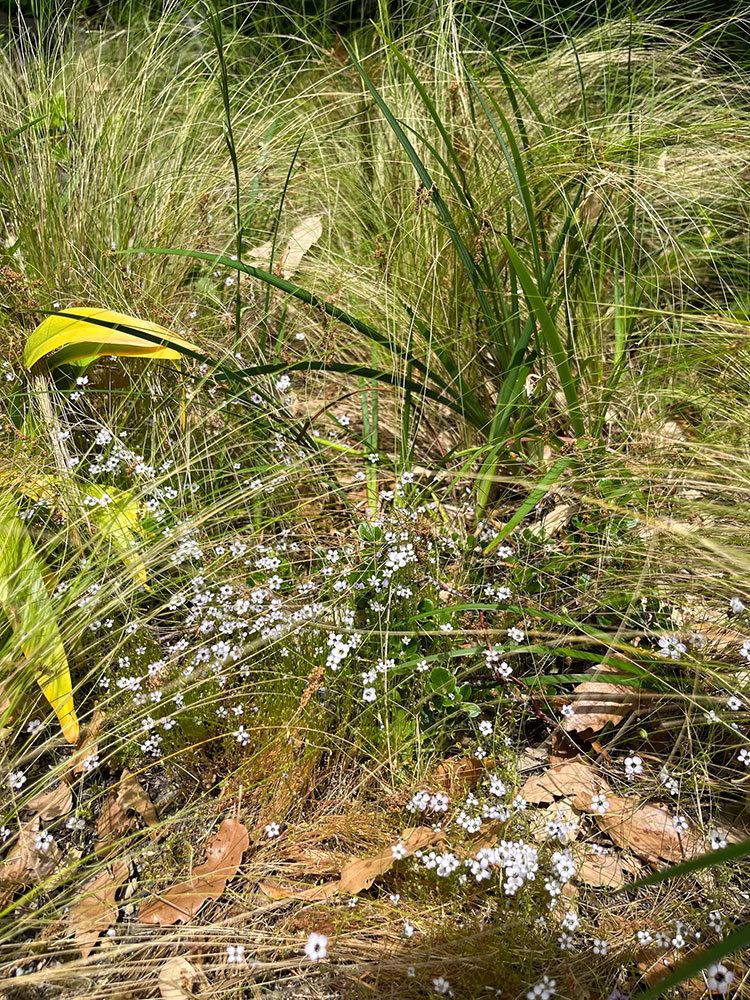
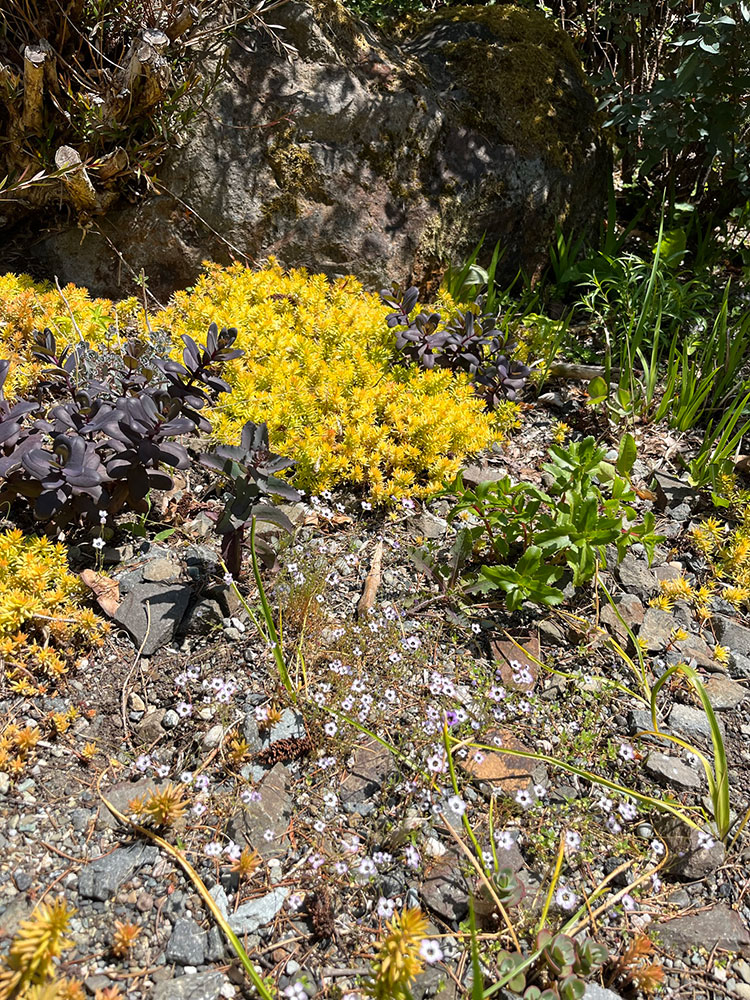
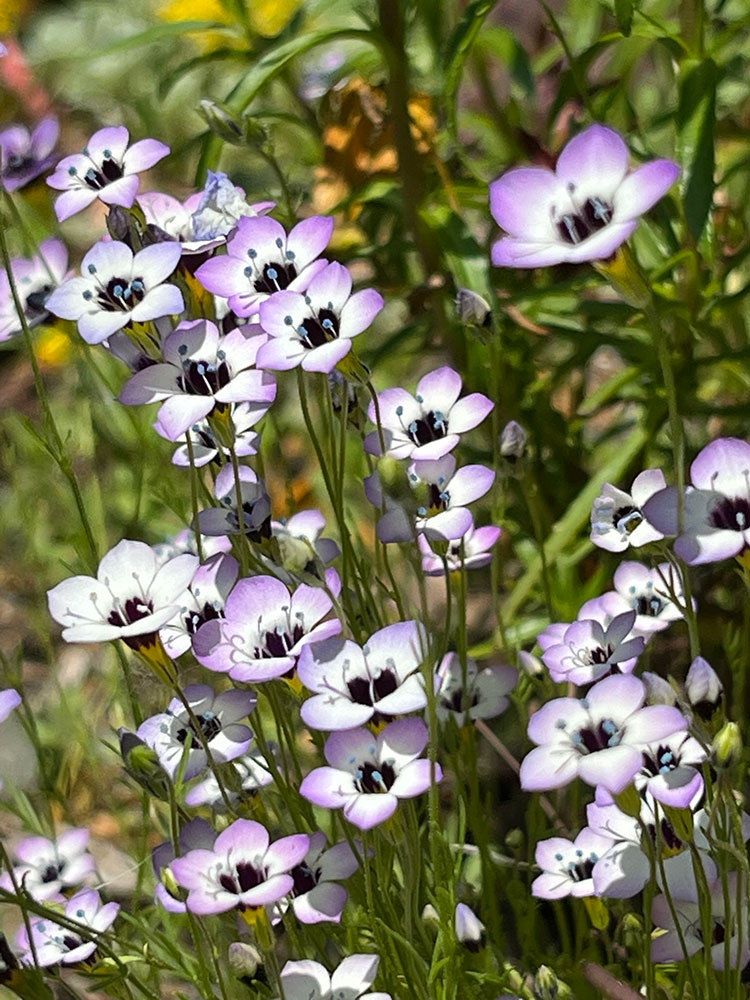
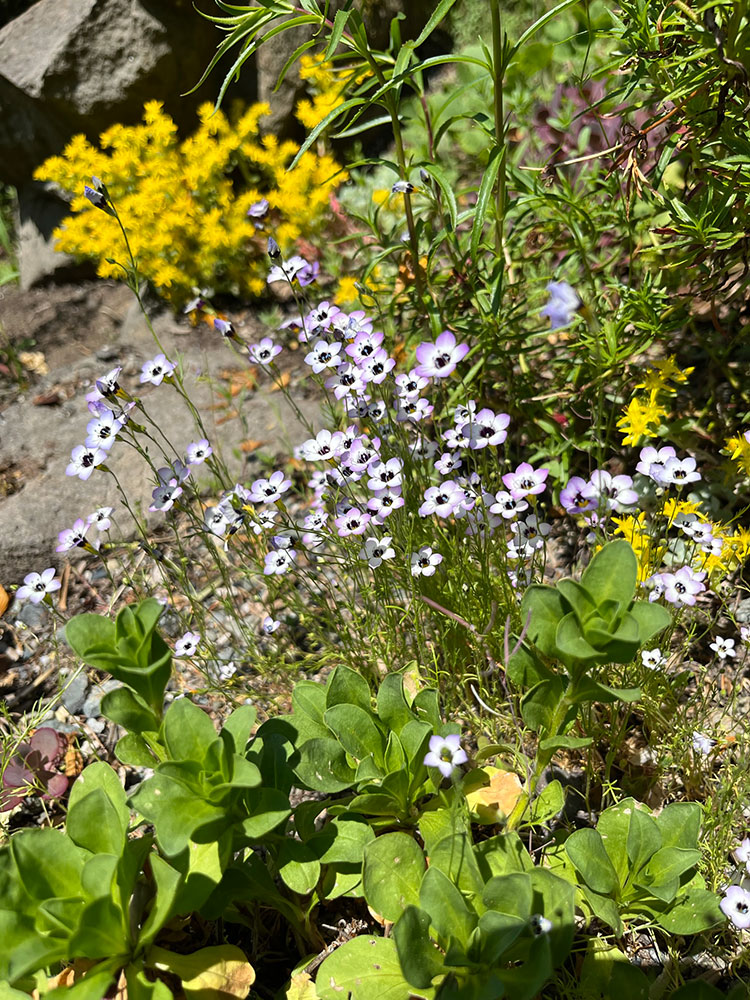
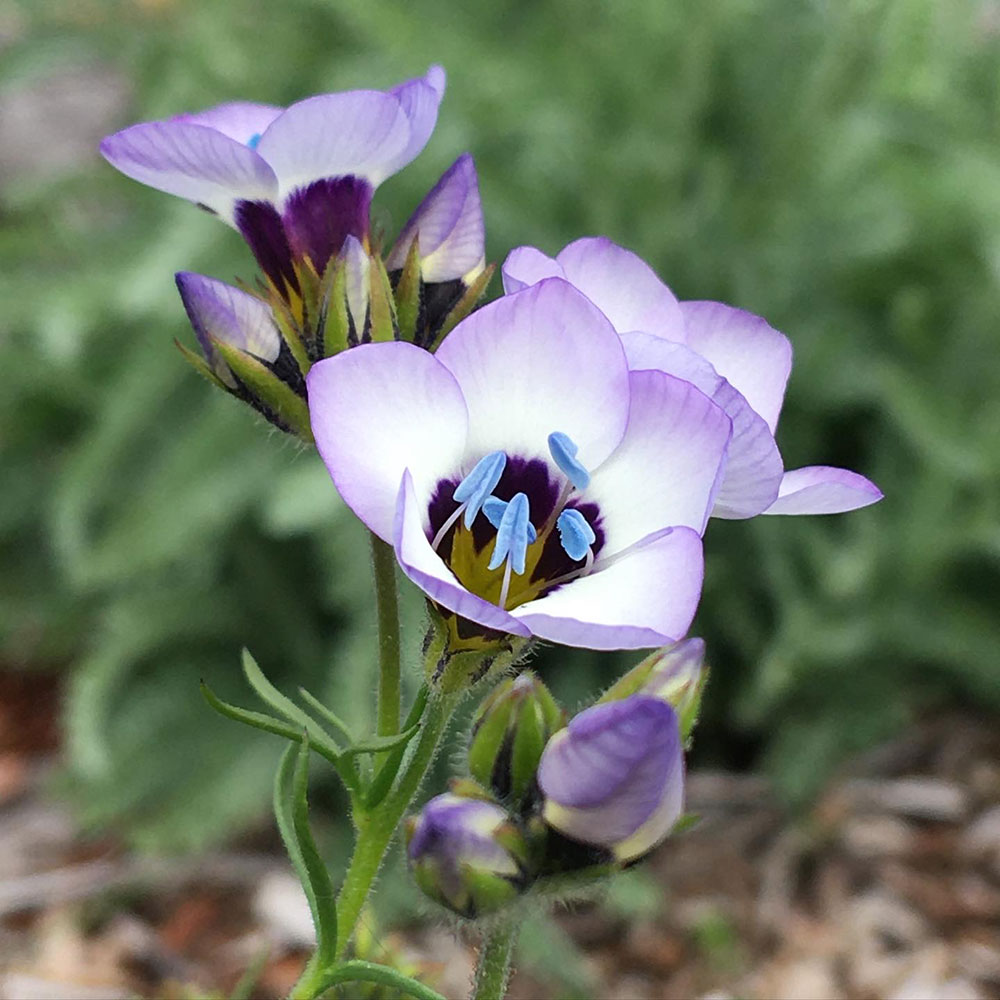
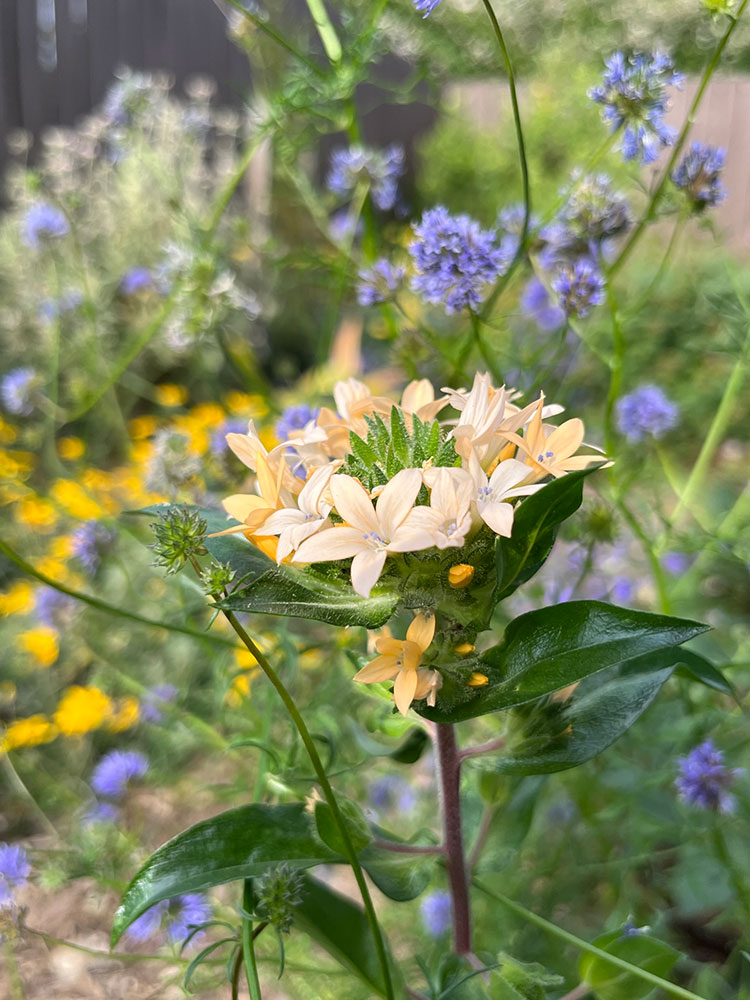
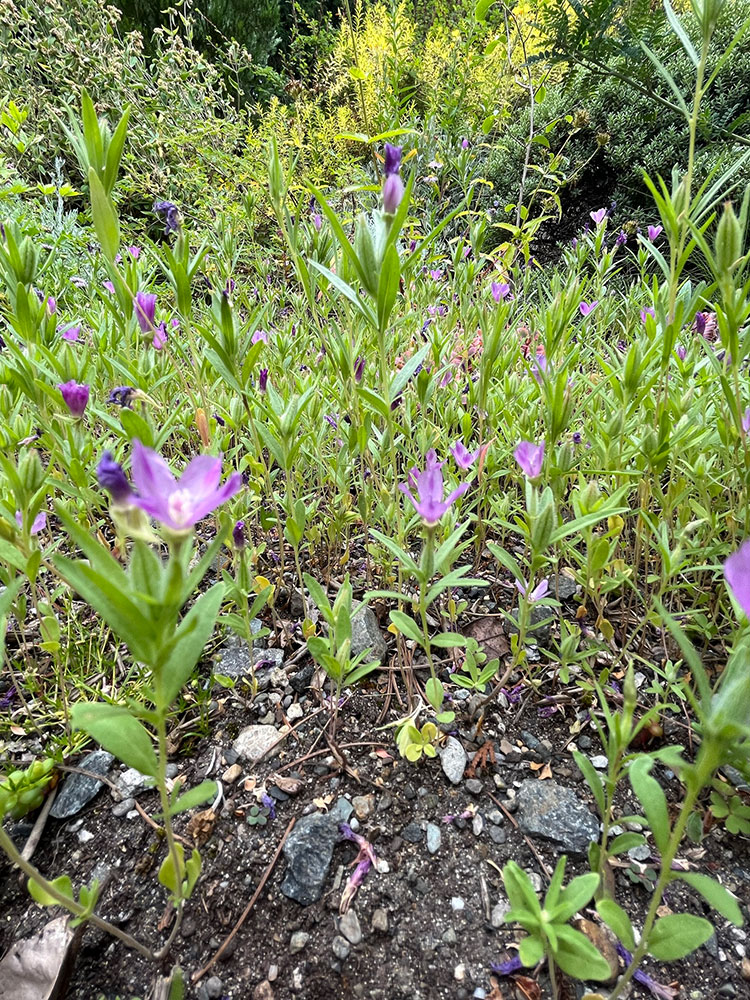
Recently we began trialing a variety of annuals in the garden. We identified spaces with adequate sunlight and either bare soil or gravel. In the Miller Garden those spaces are extremely rare! We bought some annuals which might be more tolerant of light shade, like Collinsia parviflora and Baby Blue Eyes (Nemophila menziesii), but found many of the seeds like Farewell to Spring (Clarkia sp.) and Bird’s Eye Gilia (Gilia tricolor) like ample sun. As these annuals progress some types grow well during early spring until the dry season, like meadow foam (Limnanthes douglasii). Others can actually bloom through summer. Allow these plants to grow their whole life cycle in your garden, then let them go to seed to disperse throughout. For me the softness and naturalistic chaos they add to a garden is pleasing enough. If that alone doesn’t do it for you, know that this diversity of native annuals can attract specialist native pollinators and provide essential pollen and nectar.
The first year we had a few which didn’t come up from seed at all. This was possibly due to too late sowing that year (in January). This year we sowed in September and have already seen a good quantity of sprouts. We sowed: Limnanthes douglasii, Nemophila maculata, Clarkia purpurea, Plectritis congesta, Collomia grandiflora, Collinsia grandiflora and more. Not all seed mixes are created equal. Beware so called “hummingbird mixes” which can often be a bunch of bologna. Invasive plants may be included in the mixes, which are created for the entire USA. You are much better served seeking out reputable native seed vendors. See our list below where we have found great success.
- Inside Passage Seeds – insidepassageseeds.com
- Silver Falls Seed – silverfallsseed.com
- Northwest Meadowscapes – northwestmeadowscapes.com
- Klamath Siskiyou Seeds – klamathsiskiyouseeds.com